
By Marcia Barnes
Feature Writer
-
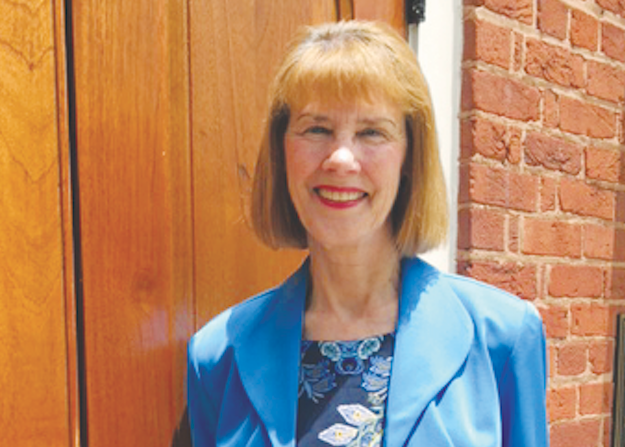
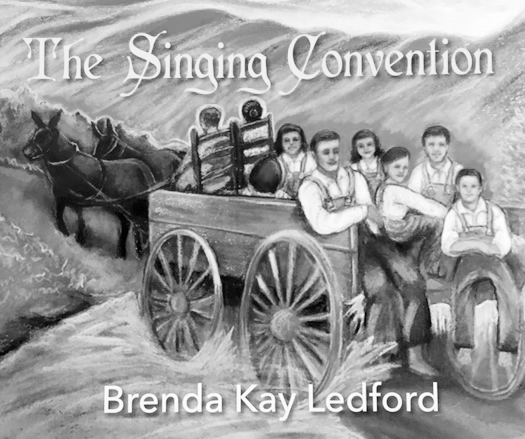
From Matheson Cove to the courthouse square, Brenda Kay Ledford’s newest book captures a significant part of Appalachian history. “The Singing Convention” echoes Ledford’s predominate themes and writing style. She is a voice of southern Appalachia.
Ledford is writer-in-residence in every sense of the term. She is a seventh-generational native of Clay County, N.C. and our prolific poet, essayist and blogger.
What divides Ledford’s written words from other accounts on Appalachia is the understandable fact that Ledford was born and raised in the region which she has observed and carefully researched.
Ledford is the insider who proceeds to chronicle history within the confines of poetic verse and essay and she trumpets the past devoid of myth, tells us what happened and when and where it all took place.
How Ledford writes and what she writes is significant. She has been honored numerable times for her poetry and prose and the writer claimed the prestigious Paul Green Award from North Carolina for “Shew Bird Mountain” in 2007 and “Sacred Fire” in 2009.
Entering into a life as a writer was one of the last things on Ledford’s mind in 1995 when she signed up for a creative writing course taught by Nancy Simpson.
“I had no interest in poetry whatsoever,” Ledford said. “My only goal was to renew my teacher’s license.”
“Nancy motivated us and she encouraged me to write about what I knew. My first poem was ‘Evening of the Rain Crow’ and again, she encouraged me to submit the poem for publication.”
“When the poem was rejected, Nancy’s words were that rejection did not mean poor writing. She told me, ‘If you get rejected, resubmit.’”
“I did and submitted the poem to the Charlotte Poetry Review. When a letter came back, my thought was to throw it into the trash can unopened, but Mother said, ‘No, no, no.’”
“It was accepted and the rest is history,” Ledford said with ease never mentioning the work hours or disappointments.
In discussing her new children’s book, Ledford locks in on how family meant everything and how hard people worked. “Can you imagine,” she says, “the rub board, lye soap and a heavy flat iron. Work never ended for the mountain women.”
Within the pages of “The Singing Convention” Ledford captures a joyful release from farm work and a respite for women who spent most of their time in the kitchen. Although the children’s book is a story of her family in the 1930s traveling from Matheson Cove to the courthouse to sing and praise the Lord in fellowship with the community at a bi-annual competition, there is much more to learn from Ledford about the event.
“Anyone and everyone came and there was no distinction between denominations. My great uncle Luther Matheson was a singing master and teacher of shape-note music. A song he had written, ‘Will He Be Ashamed of Me’ won the coveted banner at the singing convention.
“Can you imagine the excitement in this square after Luther won?” Ledford asks the question and ponders a scene she described in her book, kids loping around, women spreading blankets under the trees and pies baked that morning coming out from the baskets.
In all the commotion of winning the banner and children yielding to their moment of freedom, Ledford writes about a quiet scene taking place as Rondy’s father offers his oldest son a piece of fried chicken and words of confidence. A shift occurs in the relationship. On the final pages of “The Singing Convention” Ledford reveals this as the forming point of their relationship which elevates how Rondy sees himself.
Ledford’s sensitivity to the present in Clay County is as strong as the writer’s ability to embrace the past. She sees a continuous thread in people wanting to improve their way of life and how churches and ministries are reaching out like the arms of Jesus.
She talks about a strong faith-based community, churches working together, ministering in jails, help for addictions and helping the poor.
The writer sees the quilt images as “absolutely amazing” and Rob Tiger’s preservation of Native American history as an essential element in connection.
After three books and scores of poems what will Ledford write next?
“Anything that might appeal to me,” Ledford says. “Travel writing, maybe. I like to expand the horizon and I’d like to broaden the horizon of others by submitting my writing to magazines.”
Few would doubt Ledford’s ability to move into another genre and draw readers into the world she sees and skillfully explains to us.
A summary of Ledford’s accomplishments is already staggering. She has been honored by the North Carolina Society of Historians a dozen times for her books and blogs, awarded the Paul Green Multi-Media Award for her collection of oral history and received the Marquis Who’s Who in America’s Lifetime Achievement Award for writing in 2019.
Ledford leaves a permanent mark with her writing. She is also listed with A Directory of American Poets and Fiction Writers.