

Clay County Schools will be closed until Monday, Feb. 8 due to several cases of COVID-19 among staff and students. Three students and one staff member had tested positive for the virus as of Monday, but 201 more — 193 students and eight staff members — are currently quarantining due to possible exposure.
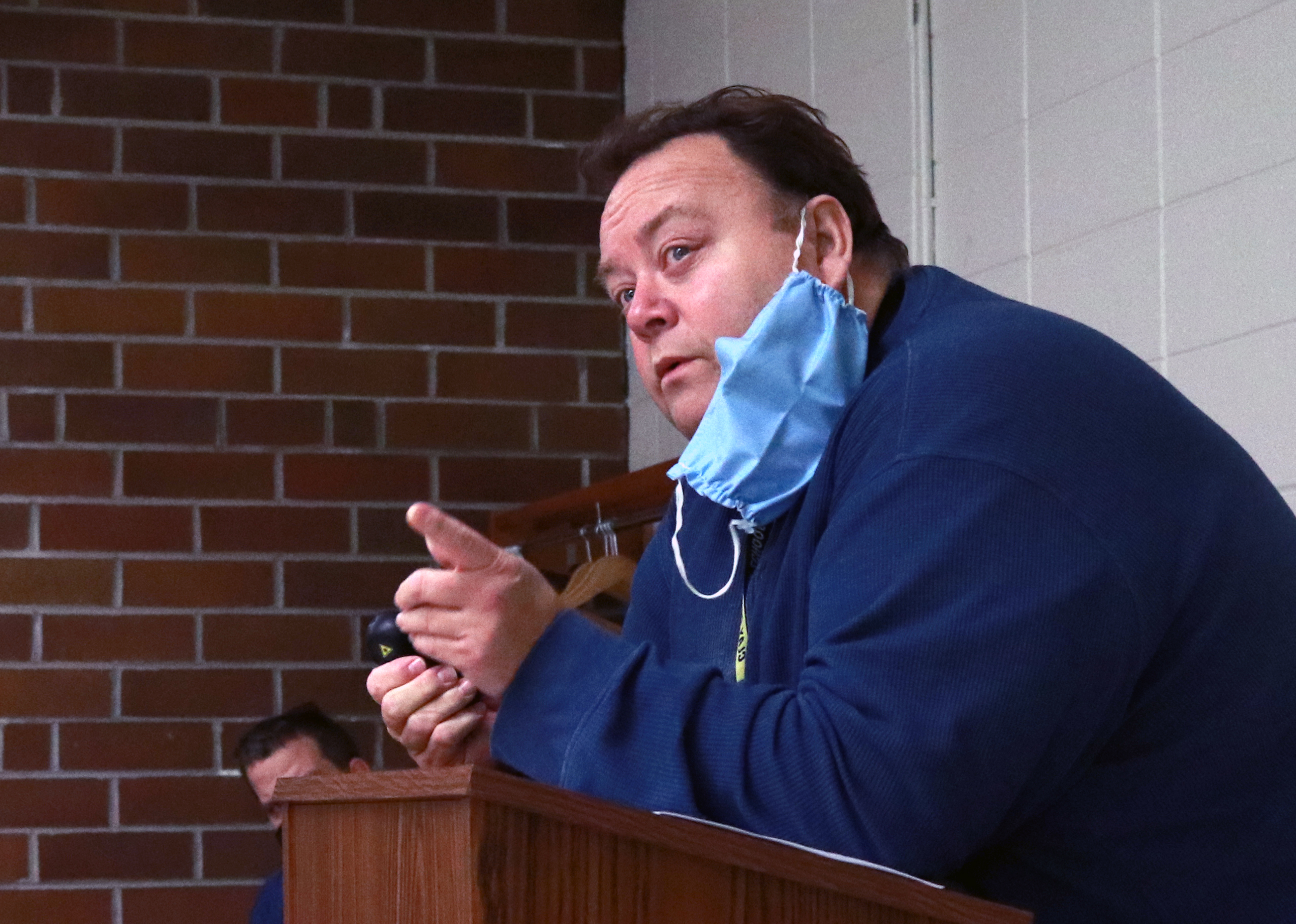
Superintendent Dale Cole announced the decision on the school system's Facebook page Monday, shortly before the Clay County Board of Education's monthly meeting. Clay County Schools will operate under remote only learning through Sunday, Feb. 7, then return to a normal face-to-face schedule on Monday, Feb. 8. "After completing some initial contact tracing, it was clear that the number of staff that would be required to quarantine due to contact with a positive or due to their own children having contact with a positive, was going to go beyond the number of substitute teachers available to cover classes," Cole said.
"We have done everything we can to maximize as much face to face learning as possible under the governor’s mandate since March of 2020. However, the safety of our students and staff must come first and we have finally reached an obstacle that we will not be able to overcome for the next two weeks," he said.
At the meeting, the board voted to approve the potential use of yellow buses for meal delivery until students return to the classroom, if logistically possible. Dr. Jason Shook was reelected chairperson of the board, while Robert Caldwell was re-elected vice-chairperson. Mayor Harry Baughn nominated Cole to replace him on the board of the Region A Partnership for Children, a non-profit organization which focuses on Smart Start funding and funding for PreK programs for seven counties in western North Carolina.
The board received reports from administrators at four Clay County Schools, beginning with Lisa Burch, director of the NC Pre-K, an inclusive preschool that accepts Clay County residents who demonstrate the greatest need for its services. Seventy-two students are enrolled in the program, divided into four classrooms of 18 apiece. According to Burch, 52 of Clay County Primary School's 82 kindergarten students were Pre-K students last year.
In reading, the students who attended Pre-K scored 11 percent higher on the BOY IReady assessment than those who did not attend. Burch said she hopes to expand the program to a fifth class which can accept 18 more students. In order to make that happen, the program will need one additional teacher and an additional assistant, which will cost $95,000 to 105,000 in salaries depending on years of experience. "We've got a fantastic PreK program that gets great results," Cole said. "The only problem with our Pre-K program is that it isn't big enough. Every bit of research in the world says the best investment a country can make is in early childhood learning. The earlier you can start, the better outcomes you are going to have, all the way through college."
Cole referenced My Future NC, a program that aims to increase the state's number of job-ready adults by two million by 2030. To achieve that goal, the program outlines areas of suggested improvement for every county in the state. For Clay County, the program recommends adding 14 more eligible 4-year-olds to enrollment in its Pre-K program.
Cole said the pandemic has shined a spotlight on the importance of schools and the quality of child care they provide. "I am hopeful that we may see more federal dollars contributed to early childhood learning, possibly more state dollars and hopefully some additional local dollars," he said.
The board received iReady Diagnostic No. 2 reports from Hayesville Primary School Principal Lindsey Hodnett and Hayesville Middle School Assistant Principal Heather Plemmons. iReady is the benchmark assessment for the schools' reading and math programs and satisfies certain state requirements. For Hayesville Primary School, grades K-2, the school's percentage of students reading on-grade level rose from 23 percent to 33 percent.
Students in tier 3, considered to be two or more grade levels behind, decreased by three percent — from nine percent overall to six percent overall. Students in tier 2, considered to be one grade level behind, decreased by six percent, from 67 percent overall to 61 percent overall. Cole said he would normally expect to see those numbers improve by 50 percent rather than the current 38 percent, but the realities of the pandemic have made an impact. "Our students were fully remote for the first time last year from March on," he said.
"At the beginning of the year, our students were here two days a week and we lost some more instructional time there. I'm actually pretty happy with the 38 percent." Cole also pointed out that teachers are learning and implementing a new reading curriculum, which typically leads to downturn in test scores in the first year, before numbers start to climb again.
In math, the school's percentage of students on-grade level in tier 1 rose from 12 percent to 20 percent. Students in tier 3 dropped from 14 percent overall down to six percent overall, while the percentage of students in tier 2 remained the same at 74 percent overall. At Hayesville Middle School, the school's percentage of students reading ongrade level rose from 35 percent to 42 percent. Students in tier 3 decreased from 38 percent overall to 33 percent overall. Students in tier 2 decreased from 27 percent overall to 24 percent overall.
In math, the school's percentage of students performing on-grade level rose from 26 percent to 33 percent. Students in tier 3 decreased from 35 percent overall to 31 percent overall, while students in tier 2 decreased from 40 percent overall to 36 percent overall.
Hayesville High School Principal Jim Saltz also updated the board on the school's EOC Exam results in several classes from fall 2020. In biology, for example, 57 students were tested, with 31 categorized as proficient and 25 not proficient, for a proficiency rating of 56.14 percent. Twenty-one students were predicted to be not proficient.
Proficiency predictions are based on a state algorithm that incorporates a long-running collection of each student's test scores. "Even taking our loss of learning into account, to have four students that were predicted to be proficient that were not, I think shows an outstanding job by the teachers, the students and the parents," Saltz said.
Cole echoed those sentiments: "It was going to be difficult for us to close gaps for students who were predicted to be not proficient this year. We're trying to not have the ones who were predicted to be proficient to fall behind. If we can do that, we have really done something this year."
Cole also provided an update on the old elementary school building, crediting the maintenance team and custodians for their work in relocating staff and students to other buildings and classrooms. Sixteen classrooms have been refurbished in various ways to facilitate the moves and all staff are scheduled to be relocated by Jan. 30. The old building is scheduled to be demolished in June or July