
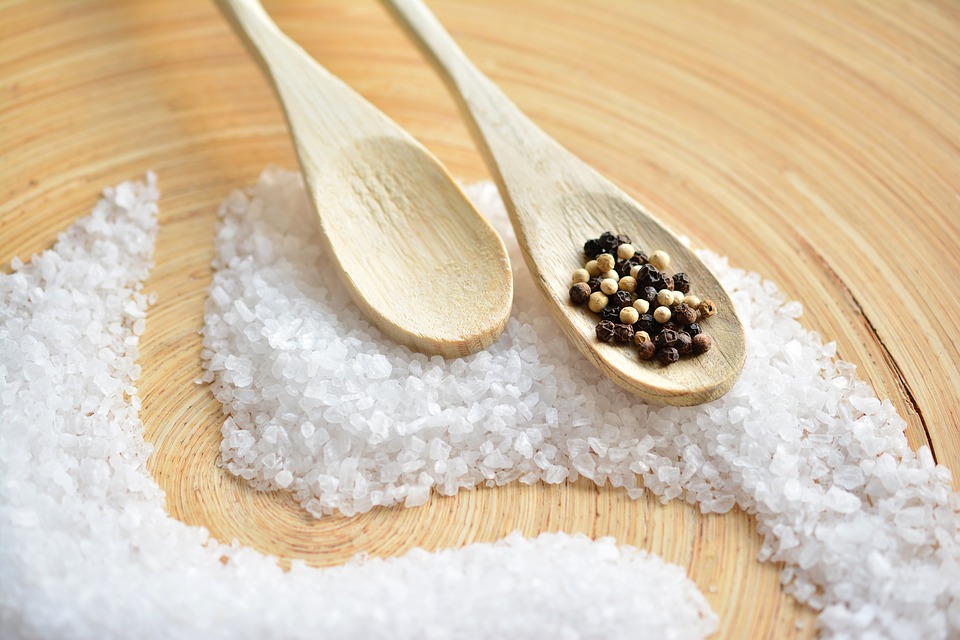
Some kitchen utensils are multi-taskers and often the simplest is the most versatile. There is no utensil simpler than a wooden spoon and yet it is useful for way more than stirring. As it turns out, the handle seem to have more uses than the bowl.
Oven doors have a catch that allows them to stay ajar as the oven cools. There are times, though, that a recipe — meringues, for example — requires more gradual cooling/drying, which can be achieved by closing the oven door on the handle of a wooden spoon for a smaller opening.
Dip the handle of a wooden spoon into oil to determine when it is hot. If bubbles form around the handle, the oil is hot. The smaller the bubbles and the faster they move, the hotter the oil.
A wooden spoon placed over a pot of liquid will prevent it from foaming over by breaking the surface tension of the liquid as it reaches the top of the pot.
Measure reductions. Dip the handle of a wooden spoon into the pot holding the liquid to be reduced. Put a rubber band around the spoon handle marking the level of the liquid. Re-insert the handle as the liquid cooks to check the level and know when it has reduced sufficiently. A variation on this tip: use an indelible pen to mark evenly spaced increments on the wooden spoon handle and use it as a kind of ruler to measure liquid levels.
If you make your own pasta, cut it to the desired length and hang it over the handle of a wooden spoon to dry. Place the spoon over the opening of a large bowl or pot. Flour the handle of the spoon to prevent the pasta from sticking to it.
Stirring with the handle instead of the bowl of a wooden spoon is gentler on biscuit dough and less dough sticks to the handle.
Thread onion rings onto the handle of a wooden spoon suspended over a large bowl or pot lined with paper towels. This allows excess oil to drip off the onion rings, keeping them crisp on all sides.
I have never tried this, but have heard/read that the handle of a wooden spoon can be used to un-jam a garbage disposal.
For poke cakes that have holes filled with thin glazes, a wooden skewer is fine for making the holes, but for thicker fillings, a wooden spoon handle is perfect. The filling can be anything you can pour and that will soak into the warm cake: flavored gelatin, sweetened condensed milk, pudding, cream of coconut, frosting, peanut butter or other nut butters, pureed fruit, preserves, fudge sauce. Some may have to be warmed for pouring consistency.
Orange Creamsicle Poke Cake
1 white cake mix
1 cup orange juice
1 (6-ounce) box orange-flavored gelatin
2 cups boiling water
1 (3.4-ounce) box instant vanilla pudding
1 cup milk
1 (8-ounce) container frozen whipped topping, thawed
Orange candy slices
Preheat oven to 350 degrees. Spray a 9- by 13-inch pan with nonstick spray.
Prepare cake according to package instructions, substituting orange juice for the water called for.
Bake cake as instructed. Remove from oven and cool for 5 minutes.
Poke holes in the top of the cake.
Dissolve orange-flavored gelatin in boiling water. Pour over the cake making sure it goes into the holes. Refrigerate to cool completely.
Whisk together the vanilla pudding and milk. Fold in thawed whipped topping.
Spread over the cooled cake. Cut into 24 pieces and store in a covered container in the refrigerator.
Garnish with pieces of orange candy just before serving.