
Hears about opioid settlement funds use
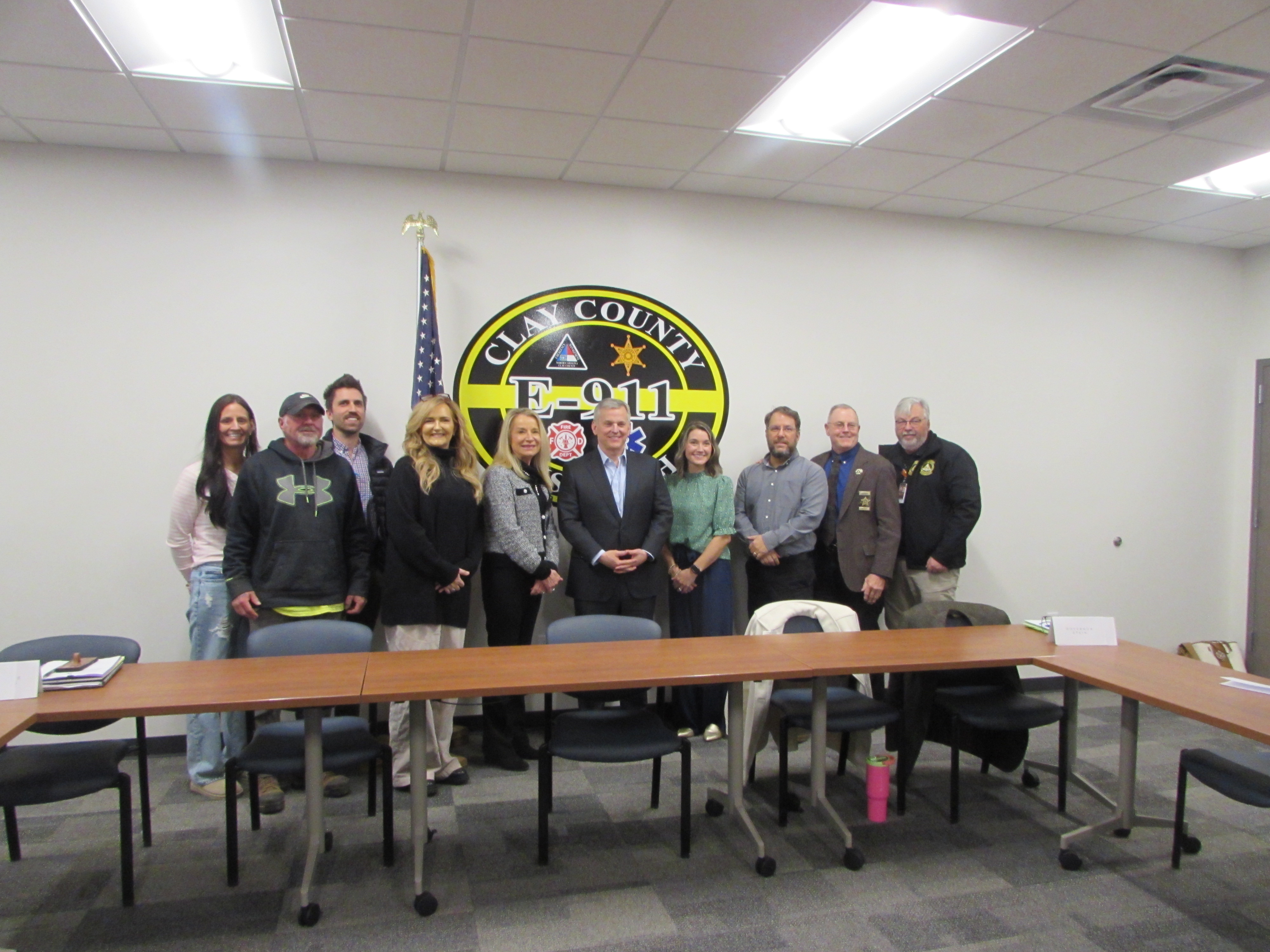
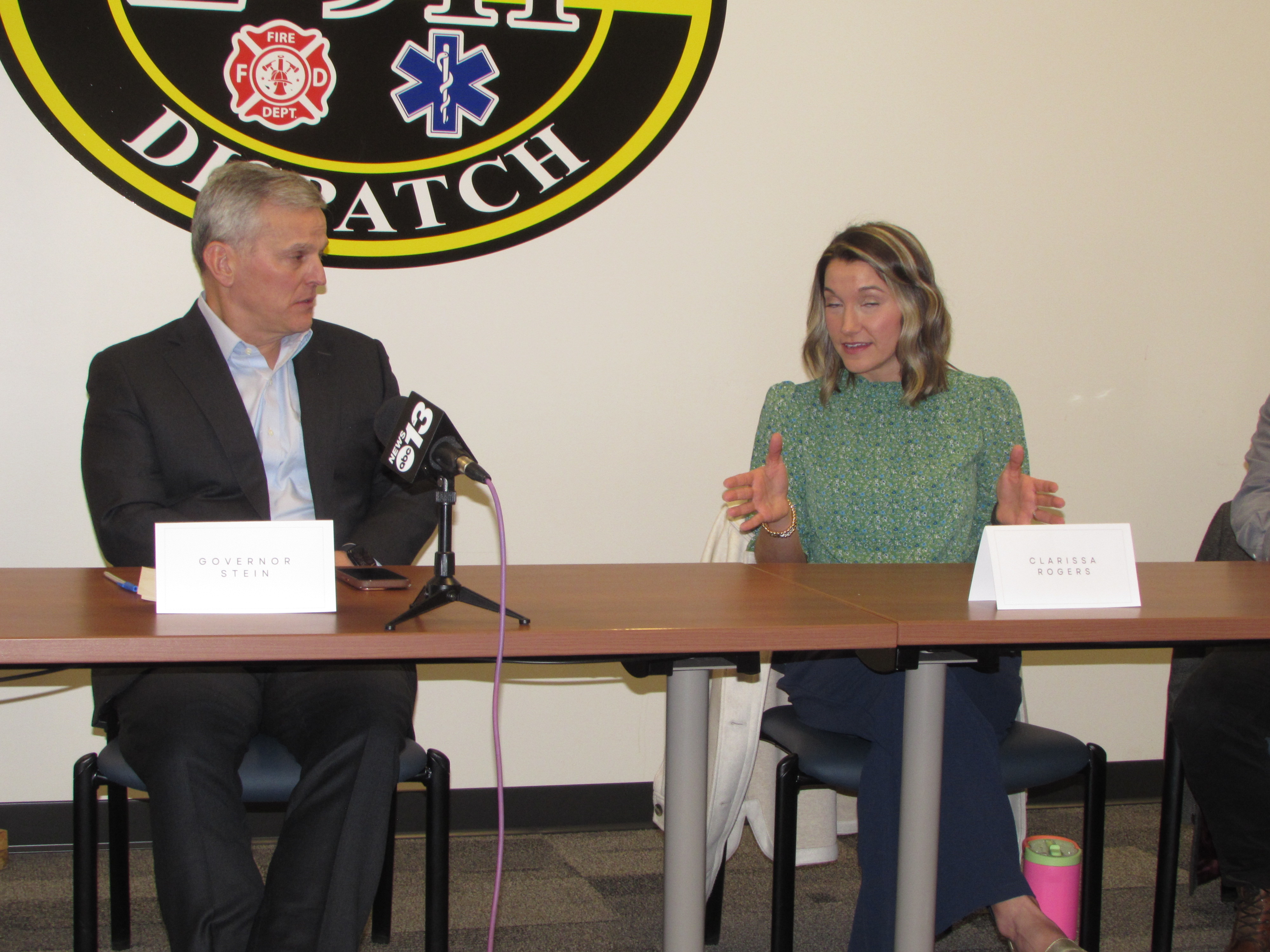
Lorraine Bennett • Clay County Progress Gov. Josh Stein listens to Public Health Director Clarissa Rogers explain how funding from an opioid settlement suit is being used in Clay County.
By Lorraine Bennett
Staff Writer
Gov. Josh Stein made a whirlwind trip through western North Carolina Tuesday with a stop in Hayesville to learn how Clay County is putting opioid settlement funds to use.
When he was serving as attorney general, Stein joined 30 bipartisan attorneys general in finalizing a multi-billion-dollar settlement against Cardinal, McKesson, AmerisourceBergen, Walgreen’s, Johnson & Johnson and other entities engaged in manufacturing, distributing and dispensing of opioids and how they contribute to addiction.
The governor met for an hour with county officials at the 911 Dispatch Center on Courthouse Drive to learn how the county is using its $663,000 in settlement funds. So far the county has spent $164,00 since it became available a few years ago. Settlement funds are expected to continue for about 18 years, according to Clay County Manager Debbie Mauney.
Among the parties who met with the governor in addition to Mauney were Health Director Clarissa Rogers, Sheriff Mark Buchanan, EMS Director Jeff Ledford, addiction specialist Dr. Travis Williams, Stacie Ledford of Rock Bottom Recovery, Todd Goins of the Department of Social Services and Todd Oakes, who told his own story of addiction and recovery.
Mauney opened the meeting by thanking the governor for his leadership in directing opioid settlement funds to Clay County. She told him the Clay County Board of Commissioners passed a resolution in October to outline how to spend some of the funds.
People are still dying from addiction in Clay County. She told him how some of the people in the room are working to do something about that. She said the funds the county is receiving will supply a revenue stream lasting more than just a few years.
“We started regional planning because here the resources are limited,” said Rogers. The county involved Stacie Ledford, founder of Rock Bottom Recovery, and Williams of Chatuge Family Practice, who is an addiction specialist and also medical director for the county’s emergency medical services.
“We all work well together,” Rogers said.
Goins said the county receives about twice the number of cases than the state average per capita, and the rate of foster care entry in the county is among the highest in the state. He said over 80 percent of the cases seen involve some type of substance abuse.
About $100,000 of the opioid settlement funds will be used for a DSS annex, where a temporary home can be provided for children who come into foster care in the middle of the night.
“In the past, children have slept in the DSS office,” Goins said.
The annex will be a stand-alone entity near the health department and the sheriff’s office and it will be family friendly and can provide a place where children can be visited.
Buchanan said his office often responds to overdose cases.“The opioid problem is overwhelming for us,” Buchanan said, adding, “It has been impressive to see all these components come together. We are a small county. Our inmates all go through drug screening.”
If they have an addiction they may be seen by a physician’s assistant or a registered nurse.
Jeff Ledford said emergency services is still a work in progress at this’ point. With 17 members they are stretched thinly and often the sheriff’s office responds to a reported overdose case before EMS personnel can get there.
Williams praised what he viewed as a team effort in the opioid addiction battle.
“This is a very small place. This area is on radar because of its isolation. There are not a lot of resources.”
Among the challenges are access to treatment and medication, lack of community resources and mental health issues.
“This is a chronic disease, just like diabetes,” Williams said. “There is no magic pill but a lot of addictions are rooted in some kind of trauma. This is a mental health desert.”
Stein said he was worried about the rising cost of Medicaid and how the so-called “big beautiful bill” will take so many millions of dollars out of North Carolina. He said Medicaid has been the best payor of the cost of drugs that help combat addiction.
Stacie Ledford explained how her Rock Bottom Recovery program is not a 12-step program. In the past nine days she said she has helped three people get into treatment.
“We are faith-based,” she said. “We invite anybody affected by addiction. We have a jail ministry. One of the problems I have is finding transitional housing. That’s my goal this year.”
Also at the discussion was Todd Oakes, who described himself as a survivor of post-traumatic stress disorder, suicide attempts and addictions that included opioids.
He said Stacie Ledford had helped both him and his wife get off drugs and he has been off opioids for two years.
“That’s very impressive,” Stein told him after Oakes received a round of applause from the group. To the people around the table, Stein said, “What you are doing is making a difference in people’s lives.
Williams conceded the severity of the problem.
“About a third you can help, about a third are borderline and about a third might not make it,” he said.
“We do care about our people and that makes a difference,” Mauney said.
After his stop in Hayesville where he ate lunch at Epic Catering, the governor and his entourage were heading to Cherokee where he will address the N.C. Association of Chiefs of Police at their 50th annual conference.