
Hayesville couple find themselves on a ship with no port
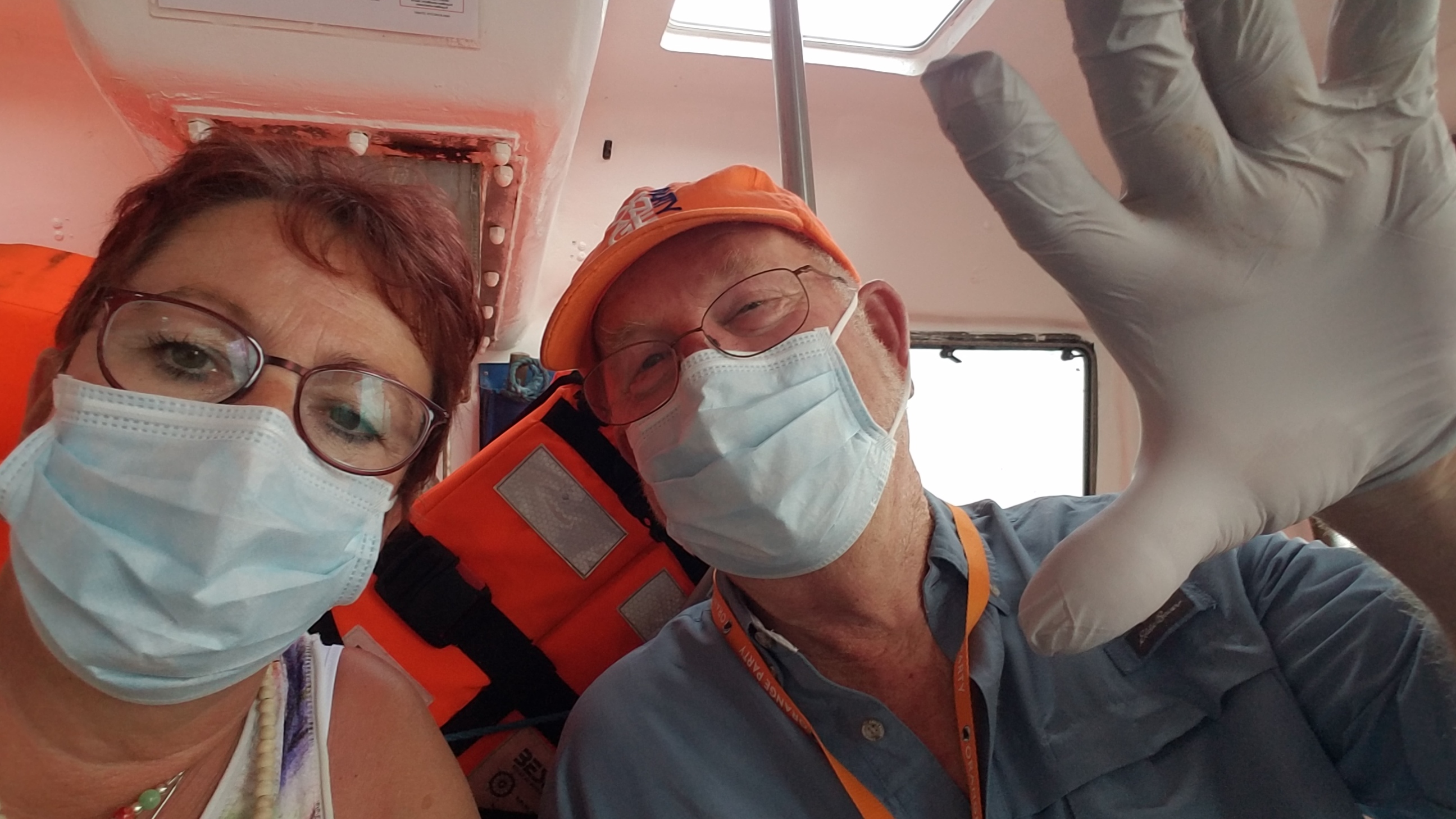
When Susanne Treacy and Scott Farnsworth boarded Holland America MS Zaandam in Buenos Aires, Argentina, on March 7, they felt safe. No travel advisories had been issued and South America had no cases of COVID-19. Little did they know, four fellow passengers would die, and the world would be watching as the ship’s captain sought refuge for his ship and its occupants.
The Clay County couple had cruised with Holland America seven times be- fore and had been planning this dream cruise for more than a year. “We knew the cruise would have been canceled if it was a huge concern,” Treacy said. They stayed in a hotel for two nights prior to boarding the ship, which has a guest capacity of 1,432 people and 615 crew members.
The World Heath Organization did not declare COVID-19 a pandemic until March 11. Meanwhile, they sailed towards Montevideo, Uruguay on March 8.
Treacy gave details from her home last week.
“The itinerary was to bring us around South America and come back through the Panama Canal and be back in Ft. Lauderdale, Fla. on April 7. This was a 31 day back-to-back cruise, where about 400 guests were going to leave us in Santiago, Chile and about the same number were coming on to sail to Ft. Lauderdale,” she said. “There were four important stops for us on this cruise. First, Port Stanley, Falkland Islands to see penguins in the wild. Second, Ushuaia, Argentina to visit the southernmost city in the world and to see the end of the 19,000 mile Pan-American Highway, which starts in Prudhoe Bay, Alaska. Third, cruising around Cape Horn, just to be able to say we did it. Fourth, going through the Panama Canal during daylight hours.”
They enjoyed Port Stanley and its penguins. “It was wonderful,” she said. The couple decided not to leave the ship
in Punta Arenas, Chile on March 14. “Our next stop was supposed to be Ushuaia, Argentina on the 15th, but on the evening of the 14th, our captain told us the port had closed to all cruise ship traffic, due to the virus. We were disappointed, but this is not the first time we have missed a port, due to weather or other circumstances. On the positive side, this meant more scenic cruising in the Chilean Fjords.
“In the meantime, we had seen changes on board: all self-serving food stations were closed and we were served everything and hand sanitizer stations popped up everywhere,” Treacy said. Because of countries closing their borders, they were told the cruise would end in Santiago, Chile and everyone would fly home.
“We were disappointed, but again, things happen out of our control,” she said. However, the ship returned to Punta Arenas because the Santiago port refused it.
It took hours of negotiations with port authorities, despite the ship being docked there less than 12 hours earlier. On March 16, everyone went through health screenings, but Chile had closed its border and no one was allowed to disembark. Treacy said they cruised the beautiful Chilean Fjords for a couple of days.
On March 20, the ship loaded three weeks worth of food and fuel in Valparaiso, Chile.
“Again, we were not allowed to dock,” she said. “All supplies were shipped from Santiago by truck, then loaded on small barges and unloaded onto the Zaandam. It was interesting to see the fueling barge and the unloading; not anything you usually get to watch.” As they left, the captain announced free wine to celebrate. “He sounded happy and positive this would come to a solution quickly,” she said.
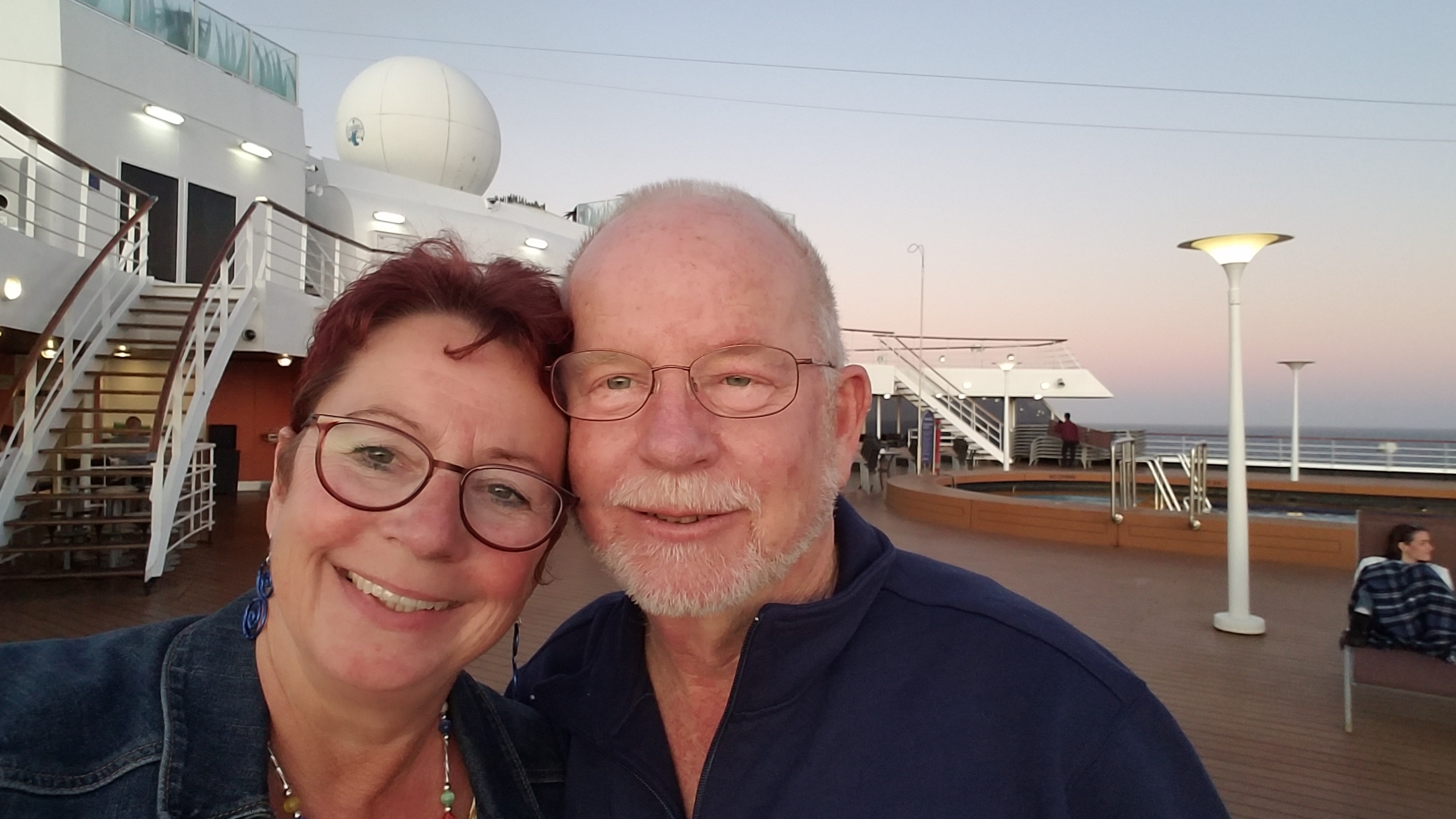
Passengers still did not know where they would go next as the cruise line inquired about docking in Mexico or San Diego, Calif. or continuing its plan to sail through the Panama Canal and to Ft. Lauderdale. The ship’s activities continued.
“Shows went on, dinners were served, people enjoyed the hot tubs and pool and drinks at the bars,” she said. “Dance lessons, aerobic classes and lectures were added. The entertainers put on an- other show. The mood on the ship was great and we felt safe in our little bubble, since by now we were listening to the news and heard about the virus spreading all over the world. Holland America opened their internet and phone lines so people could be in touch.”
On March 22, things changed. “People were mind- ing their own business, walk- ing, reading, sunning, really anything one ever thinks about doing on a cruise ship,” Treacy said. “The captain announced, due to a number of guests and crew having reported flu-like symptoms to the medical center, we would all have to go to our cabins and not leave. We picked up lunch and a couple of books in the library and headed to our stateroom. Thankfully we had booked a balcony cabin.”
A wonderful dinner and wine were delivered to the room. They were given protocols the next day. Trays would be set outside cabin doors with meals three times a day. Garbage would be collected and towels exchanged daily. They were given large bottles of water and their choice of drinks each day. Playing cards were provided, along with crossword puzzles and mind games. They had internet, phone service and new TV channels were added and new classes were broadcast.
“We were allowed to leave our cabin once for about 1/2 hour walk on the deck. Everyone had to wear a mask and was told to practice social distancing,” she said. “Every day our captain gave an inspirational message to his crew and passengers and we thank him for that.”
On March 26, the Rotterdam delivered medical staff and supplies. The next day, Treacy and Farnsworth learned four elderly passengers had died, at least two with COVID. The couple and more than half of the ship’s other healthy passengers were moved to Rotterdam on March 29.
“We felt most sorry for those with inside cabins,” she said. “They had no idea if it was day or night. Once Rotterdam came, those guests were given priority for cabins with at least an ocean view.”
Treacy said food quality on Zaandam had diminished. “Considering they were working with a skeleton crew when only 15 of 65 chefs and cooks were not quarantined, it was OK. We certainly never went hungry.” The food got better after they were moved.
They remained in Panamanian waters as the cruise lines attempted to gain passage through the Panama Canal. At first, Panama refused. When it was granted, they were told to stay inside with outside lights off and curtains closed.
“In record time, we went through the Canal and were in the Caribbean,” Treacy explained. “Our captain informed us this was now a humanitarian mission and all services like ice delivery, towel exchanges, laundry and so forth were being stopped to decrease cross contamination. Food delivery remained the same.”
During the unusual voyage, a lot happened. San Andres authorities denied an effort to airdrop medical supplies to Zaandam. Broward County Commissioners met to decide if the ship could dock in Ft. Lauderdale. As Holland America sought approval to dock in its original destination, multiple news agencies reported Florida Gov. Ron DeSantis said March 30, “We cannot afford to have people who are not even Floridians dumped into South Florida using up those valuable resources.”
“Obviously he had no clue that about 1,200 of the 1,243 guests were deemed healthy by then with no signs of the virus. There were about 50 Floridians aboard and more than 300 Americans in total,” Treacy explained. “It makes the passengers so sad, despite deaths on board, Florida still refuses to let us come ashore, disembark the healthy and give medical attention to those in need.”
On April 1, Zaandam docked and 14 people were taken to hospitals.
“A total of nine people on board tested positive, including one crew member who sadly passed away in a Ft. Lauderdale hospital.” She asked, “Could his death have been prevented if Florida hadn’t dragged their feet for so long?” She believes all others recovered.
They did not know what to expect as they entered port. “We were afraid of negative comments, but what a wonderful surprise we received from the people who live along the port entrance,” Treacy said. “They were waving flags, played music, rang bells, one older gentleman saluted our ship as we came in, people were shouting ‘welcome home.’ Even at the dock, immigration and customs people and dock workers, were waving to us and welcoming us home. What a wonderful experience after all we had been through.”
Floridians left the ship right away and were taken home by private limousine or allowed to drive their own cars home. The next day, the Canadians left early and were flown by charter to Toronto.
Someone knocked on Treacy’s cabin door around 10:30 a.m., but no one from the cruise lines was around to direct them. The couple donned masks and found someone who showed them where to go, but they could not use elevators. They boarded one of four freezing buses.
“Soaked with disinfectant and the seats were wet and the stuff was literally dripping from every surface,” Treacy said. They left the terminal guarded by about 40 motor- cycle cops, who blocked inter- sections to expedite travel to the airport.
Americans were put on a charter flight to Atlanta where they again had guards. From there, many transferred to commercial flights; however, some were not allowed on flights.
Treacy and Farnsworth’s car was parked at the airport. They had not eaten in many hours so they stopped for fast food. “Our burger at one of the chain stores never tasted this good,” she exclaimed. “The drive through was open and we decided to have a pic- nic in the parking lot.”
The Clay County Health Department contacted them and told them to self-quarantine and take their temperatures for 14 days. Quarantine is over and they are both fine. “I appreciate that this worked out so well with their communication. Thankfully we are healthy,” she added.
Other than disembarkation day, Treacy said everything went smooth considering the circumstances. “The crew on both ships did an amazing job and did everything to make the situation easier, but to be cooped up in a 200 square feet room is not easy,” Treacy said. “They did what they could and I believe that because we were all confined to our cabins early on, the whole outbreak was kept at a minimum. The respective captains thanked the guests every day for their compliance and understanding.
“Call us naive, but we really didn’t see the immense risk that it turned out to be. We were called ‘stupid and ignorant’ by some Broward County Commissioners and that we ‘deserved to be out at sea indefinitely.’”
Treacy thinks the luxury cruise industry will recover quickly. The couple does plan to cruise again.
“We have an ocean crossing planned with friends from Hayesville for the spring of 2021 and are keeping our fingers crossed for this trip to happen.”