

By Lorrie Ross
Staff Writer
“It is our responsibility as adults to help make sure the youth of Clay County receive the tools and educate them.” People of Clay CARE coordinator Atlanta Matheson stated after attending Community Anti-Drug Coalitions of America.
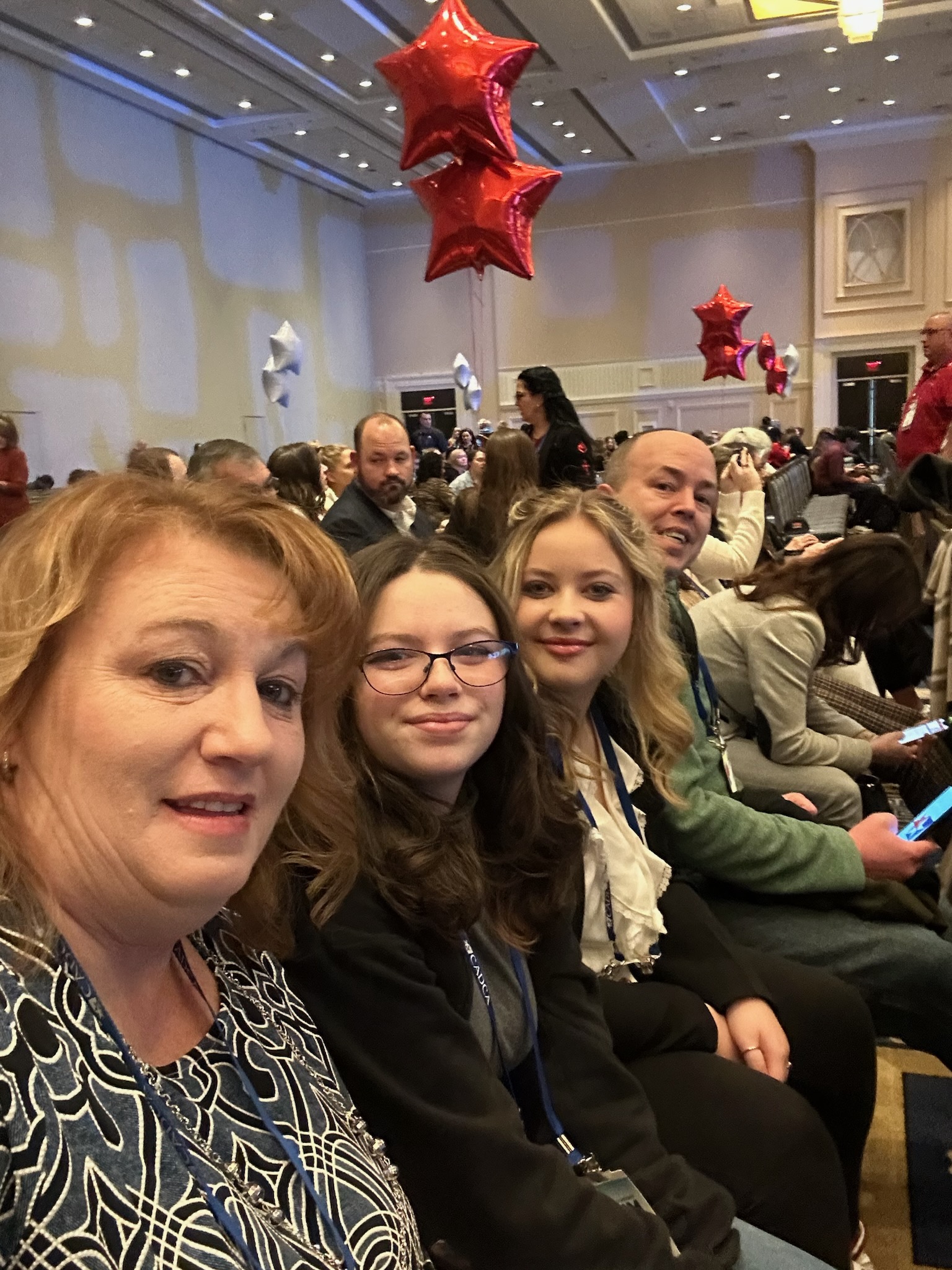
Matheson and Clay Schools Sheriff Resource Officer Chris Harper accompanied Hayesville High School students, Lyndsey Evans and Maya Polk to the Washington D.C. event. Coalitions from Charlotte, Haywood County and Wilkes County completed the North Carolina contingent. In addition to seeing a few sights, North Carolina attendees visited with their legislators and learned how primary prevention strategies can create impact.
Matheson has been involved in non-profit work for many years and attended coalition meetings prior to becoming part-time coordinator in March 2022. “I certainly did not expect the result I got from CADCA,” she said. “Most education and trainings seminars have very little interaction. CADCA has a different approach. They have up-to-date information and a very interactive approach on getting the information to stick with you. It’s about creating good relations with your entire community, with people from every sector and all walks of life, to educate and support youth and to ensure they get proper tools to talk to and engage in a drug free life with their peers.”
HHS senior Evans agrees. “I believe with prevention, one may be able to spark a conversation that will spread and influence others into making smarter decisions,” she said. “The biggest skill I learned at CADCA was how to influence others into making healthy choices.”
Evans became involved in substance misuse prevention about a year prior to being selected for CADCA. “I wanted to experience being surrounded by like-minded teenagers who want to create change in their towns,” she said. “I had no idea what to expect. I did not expect everyone to be so welcoming to our small group. I made many friends, not only from North Carolina, but around the country. This experience made me realize there are many others who have the same drive as me in drug prevention, which made me feel empowered to hope to continue being a substance prevention advocate for the rest of my life.”
The students are members of the Hayesville Teen Advisory Board, which formed to learn more about substance misuse prevention. Members include HHS students who attended a youth prevention leadership summit in Charlotte during summer 2022, along with others. One student attends TCC Early College and hopes to bring the concept to her school.
HHS freshman Polk began attending H-TAB meetings a few months ago. She was not familiar with CADCA when she was chosen to go, but she enjoyed meeting new people, including a younger student from Asheville.
Polk expected more classes, yet enjoyed learning about communication and how to read body language and tone. “The mentor was extremely helpful,” she said. “Prevention education is important so children know the harms and side effects of drugs and alcohol. While prevention should be taught in all grades, it should also be taught young as children should learn before the primary age of drug use.”
Harper’s main prevention work involvement has been as DARE instructor. “I’ve only been indirectly involved with substance misuse prevention as a deputy sheriff dealing with people struggling with addiction,” he explained. “I found the adult CADCA classes were geared towards being part of one’s local coalition and running it, membership management, partnering with other agencies and such. The difference is understandable when I get out of my SRO mindset and look at it from the perspective of someone coming from a coalition member side.”
He wants students to know more. “If people, particularly students, aren’t aware of risks and consequences of something, then they will find out when it’s too late,” he said. “Prevention education’s goal is to give everyone information to make informed decisions so they know the dangers before they are in those situations.”
Harper said one can support community prevention or rehab programs in their own way. “You may be able to refer someone who needs it to one of those programs,” he shared. “As long as we all approach the issue of substance use and misuse with sympathy, compassion, an open mind and understanding, then the efforts of those on the front line tackling the problem head on will be vastly more successful.”
Harper wants more local education on adolescent mental health, along with parent classes. “To help them understand what’s really going on in the mind of their kids,” he said. “To me, if we’re unable to get to the root of issues driving most of our youths to substances, then we will forever be fighting a losing game.”
Evans added, “If I had to teach Clay County citizens two substance-related things, it would probably be the dangers of marijuana being a gateway drug and the dangers of fentanyl poisoning in laced drugs.”
The group was able to see some sights, but Capitol Hill Day was the most fun for Evans. “I was in awe of seeing so many people of importance running around the Senate. However, the thing most insightful for me was the public speaking seminar, which resonated with me. With what I learned at CADCA, having proper communication skills is key to being able to successfully be an advocate for drug prevention. CADCA helped me become more conscious in my everyday interactions with others. I know working on communication skills would greatly benefit H-TAB.”
Harper continued, “When we interact with someone else, regardless if they’re a youth or adult and we dismiss something they’re dealing with or talking about as not that bad or someone’s had it worse or you respond with anger or disgust if they’re an active user, we only drive that person further away from opening up for help and closer to what will only give temporary relief, but cause a lifetime of problems.”
Community Impact N.C. funded the trip on behalf of Clay’s coalition. Kelly Teague, of CINC, commended People of Clay CARE. “They have worked for years to provide a safer, healthier place for all ages, by using policies and education. There has been interest by local youth about the increase in substance use. What adults assess, the youth live. Their involvement is more than adult leaders giving to them, they are the contributors and ready to invest in their community. Five Clay youth are currently recognized as part of a statewide coalition-Impact Youth NC.”
Matheson reminded, “I would love to see more participation from our community poured into addiction prevention and mental health issues that affect our youth on a local level.”
Matheson ended, “Consider coming to our next People of Clay CARE town hall which will be announced soon and you may just learn that everybody is needed in the prevention fight.”
Visit People of Clay CARE on Facebook.
Community Anti-Drug Coalitions of America represents more than 5,000 community coalitions which believe, “prevention of substance use and misuse before it starts is the most effective and cost-efficient way to reduce substance use and its associated costs.” Visit www.CADCA.org for details.