
The Tennessee Valley Authority is continuing to answer the question asked by residents about the feasibility of an underwater transmission line to a planned Blue Ridge Mountain Electric Management Cooperative substation in Shooting Creek. The TVA and BRMEMC invited the public to an open house on Dec. 4, 2025, asking members of the public to engage with them as they considered potential routes.
BREMC plans to build a substation on Burnt Schoolhouse Road in Clay County and TVA proposes to build about 7.7 to 9.5 miles of single-circuit transmission line to serve the substation. The line would be built using primarily single-pole structures centered on a new 100-foot-wide right of way. The surrounding area has experienced load growth due to residential and small commercial development and is currently served out of the existing Hayesville and Woods Grove substations.
The new 161-kV transmission project stirred mixed comments and requests for the line to be run underwater in Lake Chatuge. The public comment period ended Jan. 5 with more than 200 comments representing at least 148 families. The TVA extended the comment period as feedback received during the initial commenting period provided valuable information to support a thorough analysis of options being considered. The announcement of the extended commenting period meant that TVA would continue to accept feedback until the decision on a preferred route.
Following requests from Congressman Chuck Edwards and members of the public, TVA committed to perform a detailed examination of potentially routing the 161-kV transmission line across the bottom of Lake Chatuge. To inform the analysis, TVA consulted with material vendors, peer utilities and independent consultants with engineering and construction experience in this field.
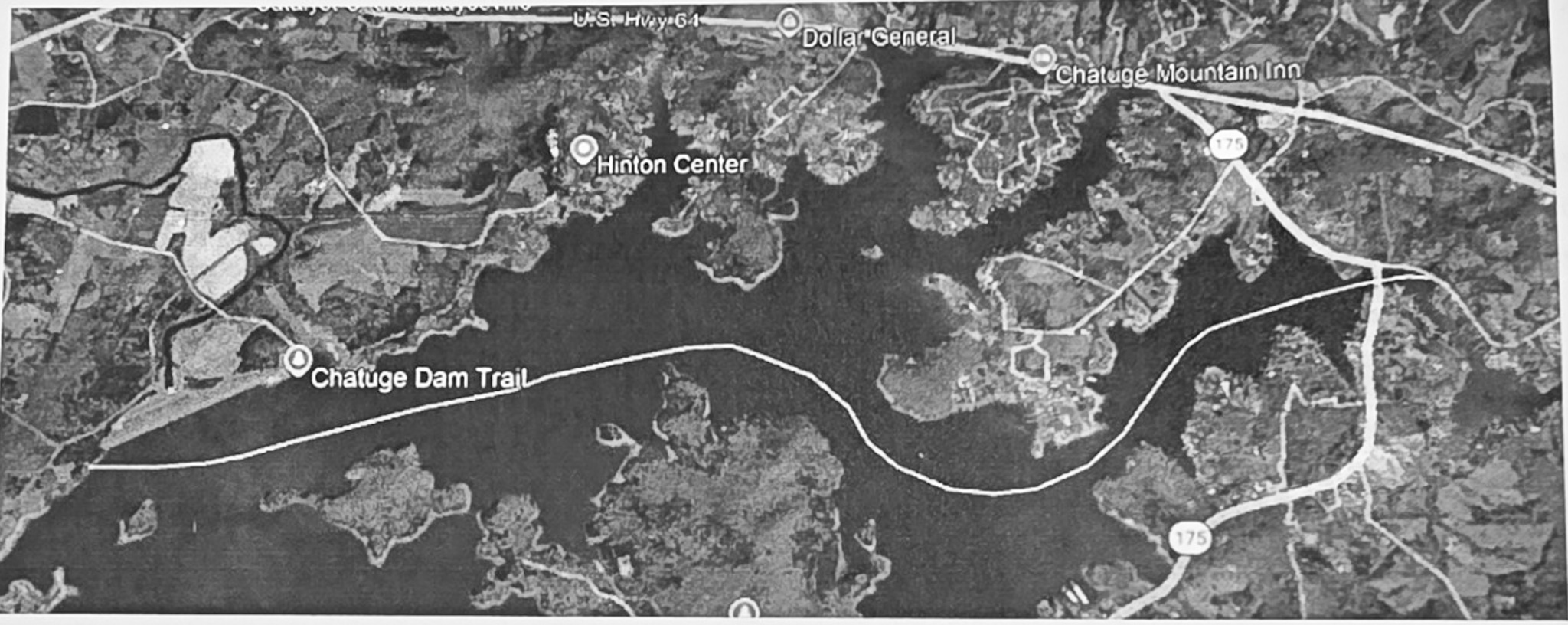
The conceptual route across the lake would be approximately 4.3 miles. The TVA has answered in a detailed report the challenges associated with constructing an underwater transmission line at Chatuge.
TVA enlisted independent engineering analysis on the means of construction and associated cost estimates. This analysis found that the construction of a submarine route for a 161-kV transmission line under Lake Chatuge would involve multiple complexities, differentiating such a project from existing submarine lines located in other bodies of water. For context, submarine transmission lines are typically run in instances of large water crossings, such as a small island with no generation or when there are no feasible overhead land-based options. They are not
used in a project of this small scope or length.
Due to these typical instances, submarine cables are manufactured at 8 to 12 inches in diameter on large reels of up to 10 miles in length. The cable or reel is then placed directly onto a ship for transport to the project location. Since Lake Chatuge is not on or near a navigable waterway, delivery for these heavy large reels would not be possible. The cable would have to be spliced into smaller lengths to be transported. This would increase costs for construction and materials and would increase likelihood of additional maintenance costs down the line.
In other uses of the underwater lines, the cable is installed via large vessels with specialized underwater plows. As these vessels would be too large to navigate to Lake Chatuge, special barges and tugboats would need to be developed and constructed onsite to install the cable.
Regarding budget and schedule, based on input from experts with experience in this type of work it is estimated that a route across the bottom of Lake Chatuge is likely to exceed $100 million. This is potentially 10 times the estimated cost of the overhead options under consideration and would delay the projected in-service date by five years.
This would be due to the increased costs associated with splicing, transporting and installing submarine cables in a way that is outside the industry norm. The more specialized the process, the higher the cost. In addition, these issues would lead to delays in the design and construction of the transmission line and would require additional permitting outlined.
The TVA reported that if the line were constructed under Lake Chatuge, they anticipate the following long-term impacts based on consultation with external experts in relation to:
Maintenance and reliability
• The feasibility review determined that routing the line under Lake Chatuge would mean installation of large riser structures where the cable enters and exits the lake. The underwater line would be installed as multiple underwater splices because the cable must be transported in smaller sections since barge delivery is not possible. This would require specialized monitoring and testing, as well as the risk of extended outages — likely months — should a splice failure occur. This poses a risk to the electricity reliability in the area and introduces potential for increased maintenance costs over the life of the line.
Environmental/recreational impacts
Based on the information gleaned from the independent analysis, TVA identified environmental and recreational impacts, along with additional review and permitting that would further impact the schedule and resulting reliability challenges:
• Cable installation could increase turbidity, sediment plumes, or localized shoreline impacts. Importantly, the reservoir is actively used for recreation, so impacts to boating, navigation and public access would need to be identified and mitigations developed.
• Submerged cultural resources surveys would be required to ensure the crossing does not affect archaeological or historic sites, consultation with affected tribes would be required with State Historic Preservation Offices and Tribal nations to ensure no adverse effects.
• A submarine installation would require consultation and approval from the United States Army Corps of Engineers, State approval for Clean Water Act Section 401, and the National Pollutant Discharge Elimination System (NPDES) permit, a mandatory program created by the 1972 Clean Water Act to control water pollution by regulating “point sources” that discharge pollutants into U.S. Waters.
• Other activities to support the construction such as lay down areas, access, and soil disposal/borrow areas must be identified and could also temporarily affect recreation, boating and shoreline users at Lake Chatuge.
• Disturbance of lakebed sediments and underwater habitat could affect listed aquatic species (fish, mussels) and other sensitive biological resources, requiring coordination with U.S. Fish and Wildlife Service and review through TVA Natural Heritage data.
• Review would also consider impacts of sedimentation disturbance to local drinking water. Nearby cities, including Hiawassee, Ga. and Murphy, N.C. get their drinking water from Lake Chatuge.
• It is possible any of these permits could be denied, further delaying the project.
Impacts to Lake Chatuge property owners and local community
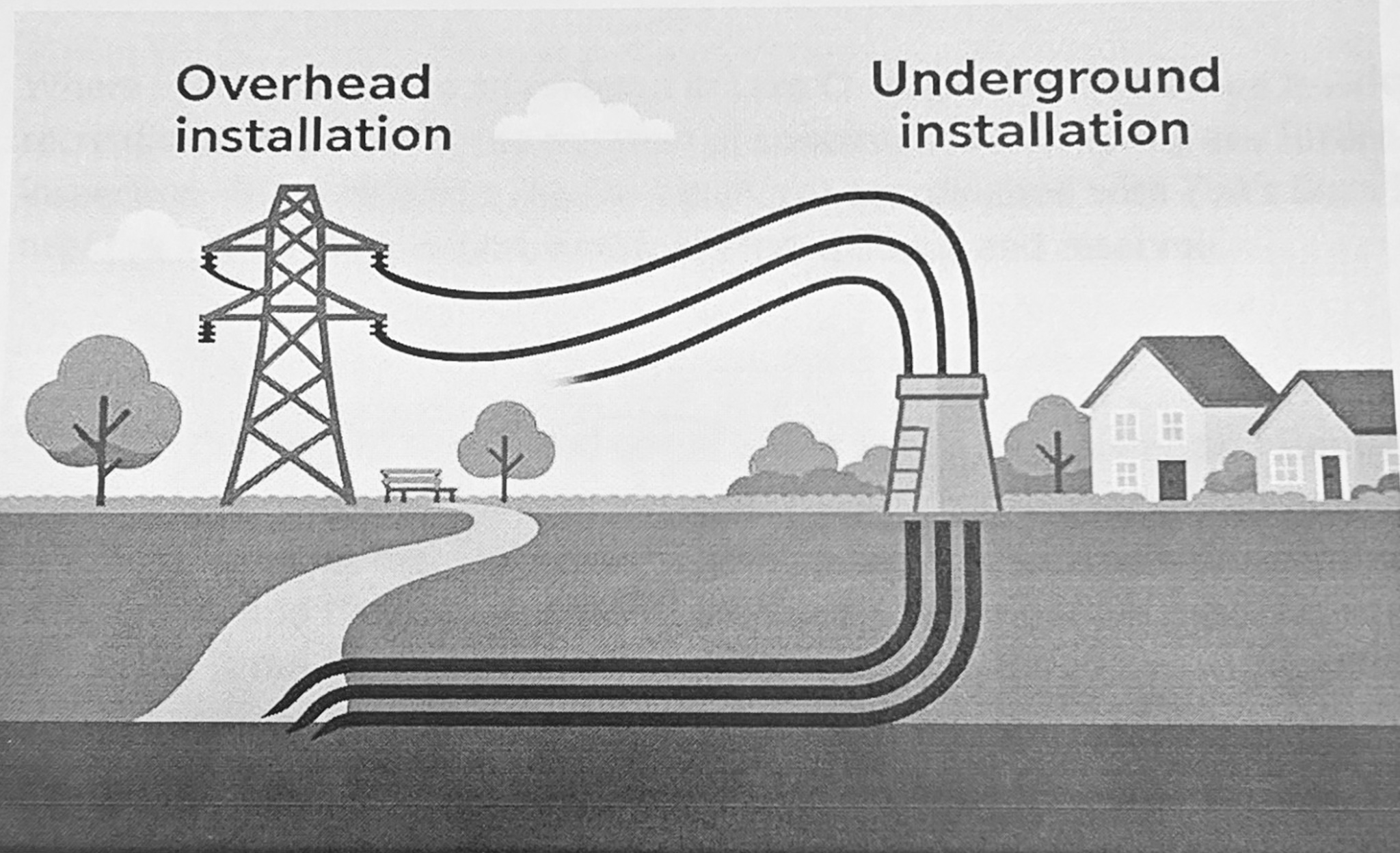
Prior to and after running under Lake Chatuge, the transmission line would need to transition between overhead and underground installation. This requires a specialized structure commonly called a termination or riser structure that would typically house surge arrestors and fiber-optic splice boxes. The location, construction, and maintenance of this structure would be much more impactful to a property owner compared to a typical directly embedded pole structure due to the need for excavation for foundations and concrete duct banks to house the underground cables, which would prohibit any agricultural or ground disturbing activities within the easement. The riser/termination structure itself would be fenced in order to control access given the sensitive equipment housed within.
Where the line would be submerged in Lake Chatuge, there would be restrictions on boating and recreational activities for the duration of construction and during any future maintenance or inspection. This would also require significant coordination with TVA's Dam Safety team to assure no negative impacts to the dam, embankment, spillway and reservoir.
As noted, this type of design and construction would have significant impact to property owners on or near the lake, the general public who uses the lake for recreation and others in the community. If TVA were to pursue this line, TVA would not move forward with a route selection without first providing public notice and the opportunity for feedback from impacted property owners and the general public. This is the same process that has been provided for potentially affected property owners along the alternative routes currently under consideration for the Shooting Creek Transmission Project.
Summary
Given the significant technical, logistical, cost, and reliability concerns, as well as potential environmental impacts, TVA has determined that routing the new 161-kV transmission line along the bottom of Lake Chatuge is not a feasible option. TVA continues to evaluate the route options that have been previously presented to the public with plans to make a preferred route announcement this summer.