
By Eleanor Moyer
Guest Writer
Garden chores for July, weed, water and weed some more, done. I was doing just that at the Master Gardener Discovery Garden this week in the blazing hot sun while dreaming of an ice cold glass of tea.
I came across a plant I did not recognize yet it is as common as freckles on a redhead New Jersey Tea (Ceanothus americanus). It’s a shrubby Buckthorn perennial with fragrant white flowers that last about a month in early summer. It was called Red Root Tea until the Boston Tea Party when colonists could no longer count on English imports. The leaves are harvested when flowering, dried then seeped as other teas. The concoction has no caffeine. The shrub grows to about three feet tall with light green leaves. It is native to eastern United States into Canada and is a magnet for predatory wasps, other pollinators, butterflies and hummingbirds.
Mammals like deer and elk can love this plant to death. It grows in full sun to light shade in dry, rocky or clay soil. New Jersey Tea could be a useful plant for rocky slopes and is lovely in a wildlife garden. Its roots fix nitrogen in the soil. It can be grown from seed or transplants although it is slow to develop as it puts most of its energy into deep roots for the first three years.
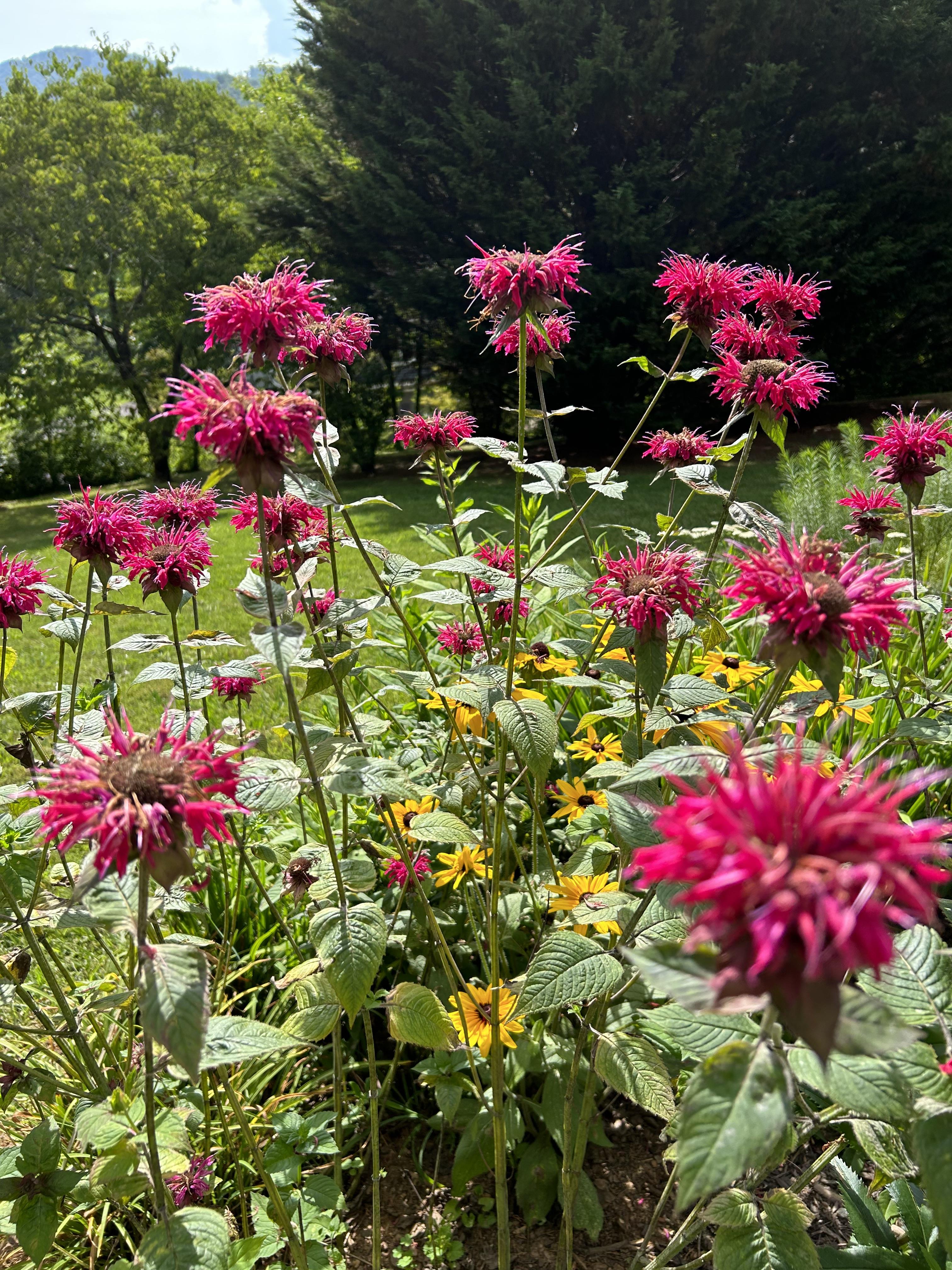
As I dream of tea, I am looking out my window at a lovely stand of bee balm (Mondara didyma) also know as Oswego tea. Its leaves were brewed by colonists during their boycott of English tea. They learned of its usefulness from the Oswego tribe of American Indians, hence the name.
My plants have hot pink flowers that look like the fur of cartoon cats jolted by electricity. To be honest, many gardeners grouse about its tendency toward powdery mildew and a thuggish habit. Butterflies, bees and hummingbirds have not gotten this news and just love the plant.
According to Allan Armitage, a native plant guru, the species Mondara bartlettii has not shown these faults, but I am having a difficult time locating any seeds or plants to purchase. My variety is growing in an area that has not been amended and is thriving. There are many cultivars available of M. didyma promising disease resistance but it will depend of location, weather etc. Full sun and good air circulation help with resistance.
Bee balm is easy to locate and can be propagated with seeds, root division and softwood cuttings. It’s a great pass-along plant. It is tolerant of rabbits and deer, clay soil and Black Walnut trees. All varieties make excellent cut flowers and when cut back after flowering will produce new leaves and a smaller flush of flowers.
Here are two plants that are native to this area, are medicinal and come with centuries of history. Guess finding some for our gardens is another to-do to add to our July list.